
कोयला गैसीकरण: क्या यह भारत के उर्वरक संकट का समाधान है?
27 Apr 2026
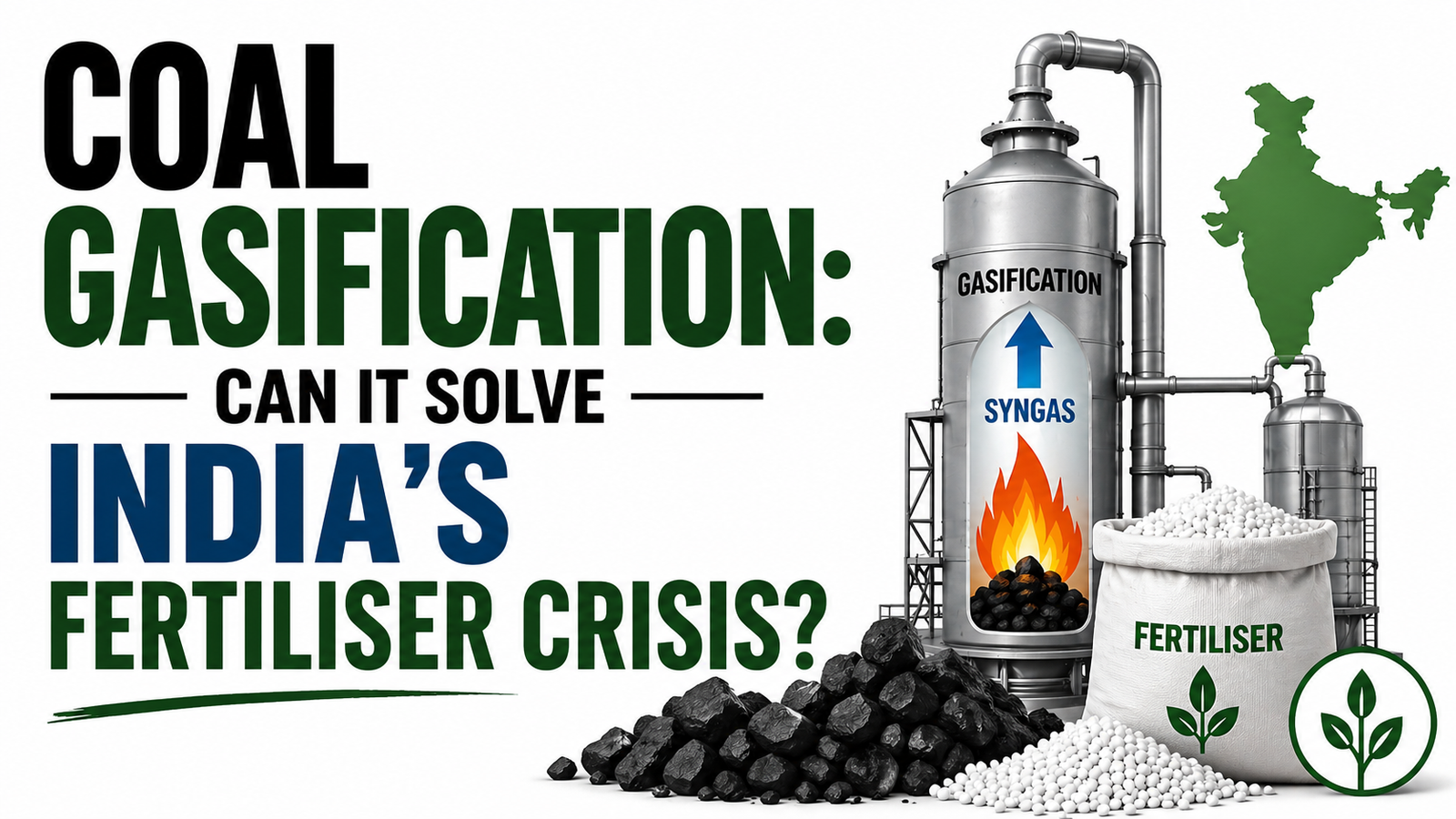
भारत में उर्वरक संकट को कम करने के लिए कोयला गैसीकरण को एक संभावित समाधान के रूप में देखा जा रहा है, क्योंकि इससे आयातित प्राकृतिक गैस पर निर्भरता घट सकती है। हालांकि, इसकी उच्च लागत, पर्यावरणीय चिंताएँ और परियोजनाओं के धीमे क्रियान्वयन जैसी चुनौतियों के कारण बहुत कम परियोजनाएँ आगे बढ़ पाई हैं। इसलिए, यह वर्तमान उर्वरक संकट का तात्कालिक समाधान साबित नहीं हो पा रहा है।
भारत में कोल गैसीकरण
उर्वरक संकट का घरेलू समाधान (Study Notes)
🌍 1. कारण: यह अभी खबरों में क्यों है?
वैश्विक संघर्ष: पश्चिम एशिया (West Asia) में चल रहे तनाव के कारण वैश्विक आपूर्ति श्रृंखला (supply chain) बाधित हो रही है।
प्रभाव: भारत को आयातित (imported) उर्वरकों और यूरिया की आपूर्ति में कमी का सामना करना पड़ रहा है, जिससे इसका घरेलू उत्पादन बहुत महत्वपूर्ण हो गया है।
🏭 2. प्रस्तावित समाधान: कोल गैसीकरण क्या है?
- प्रक्रिया: कोयले को सीधे जलाने के बजाय, इसे सिनगैस (syngas - सिंथेटिक गैस) में बदल दिया जाता है।
- अंतिम उत्पाद: फिर इस सिनगैस का उपयोग उर्वरक, अमोनियम नाइट्रेट, मेथनॉल और सिंथेटिक प्राकृतिक गैस (SNG) जैसे मूल्यवान उत्पाद बनाने के लिए किया जाता है।
- फायदा: यह कोयले का उपयोग करने का एक अधिक स्वच्छ और टिकाऊ (sustainable) तरीका है। इससे भारत अपना खुद का उर्वरक बना सकता है और आत्मनिर्भर बन सकता है।
🎯 3. लक्ष्य बनाम वास्तविकता (Goal vs Reality)
सरकार का लक्ष्य: कोयला मंत्रालय का लक्ष्य साल 2030 तक 100 मिलियन टन (MT) कोयले का गैसीकरण करना है।
विशेषज्ञों की राय: उद्योग विशेषज्ञों (जैसे EY-Parthenon) का कहना है कि यह लक्ष्य "बहुत दूर की कौड़ी" है। उनका अनुमान है कि 2030 तक भारत केवल 50-60 MT तक ही पहुंच पाएगा।
सरकार का पक्ष: मंत्रालय को भरोसा है और उसने कोल इंडिया, BHEL, GAIL और जिंदल जैसी कंपनियों के सात प्रमुख प्रोजेक्ट्स को ₹6,133 करोड़ की वित्तीय सहायता दे दी है, जो 2029-30 तक शुरू हो जाएंगे।
🚧 4. बाधाएं: यह इतनी धीमी गति से क्यों चल रहा है?
- अधिक लागत: ये प्रोजेक्ट बहुत अधिक "पूंजी-गहन" (capital-intensive) हैं, यानी भारी निवेश की आवश्यकता होती है।
- उच्च जोखिम: निजी कंपनियां निवेश करने से हिचकिचा रही हैं क्योंकि इस बात की कोई गारंटी नहीं है कि उनके उत्पाद को लाभदायक कीमत पर खरीदा जाएगा।
- भारतीय कोयले की गुणवत्ता: भारतीय कोयले में "राख की मात्रा" (ash content) अधिक होती है, इसलिए तकनीक को स्थानीय परिस्थितियों के अनुकूल बनाने में समय लगेगा।
📣 5. उद्योग (Industry) की मांगें
2030 के लक्ष्य को पूरा करने के लिए, उद्योग सरकार से चाहता है कि:
- दीर्घकालिक नीतियां (Long-Term Policies): स्पष्ट नियम हों ताकि कंपनियां सालों पहले से योजना बना सकें।
- खरीद की गारंटी (Guarantee 'Offtake'): इस बात का वादा कि सरकार या बाजार उनके द्वारा उत्पादित उर्वरक को निश्चित रूप से खरीदेगा।
- समान व्यवहार (Equal Treatment): कोयला-आधारित यूरिया संयंत्रों को भी गैस-आधारित संयंत्रों जैसा ही समर्थन और आश्वासन मिले।
📌 मुख्य निष्कर्ष (Key Takeaway)
कोल गैसीकरण (Coal gasification) भारत के लिए उर्वरक संकट का सबसे अच्छा घरेलू समाधान है। लेकिन भारी लागत और खरीद की गारंटी जैसी स्पष्ट नीतियों के अभाव में, 2030 तक 100 मिलियन टन का लक्ष्य हासिल करना बहुत मुश्किल लग रहा है।
Coal Gasification: Can It Solve India’s Fertiliser Crisis?
27 Apr 2026
Coal gasification is being promoted as a potential solution to India’s fertiliser shortage by reducing dependence on imported natural gas. However, despite its promise, the technology faces challenges such as high costs, environmental concerns, and slow project execution. As a result, only a few projects have progressed beyond initial stages, making it a limited short-term solution to the ongoing fertiliser crisis.
Coal Gasification in India
The Path to Fertilizer Self-Sufficiency (Study Notes)
🌍 1. The Trigger: Why is this in the news?
Global Conflict: Ongoing tensions in West Asia are disrupting global supply chains.
The Impact: India is facing pressure on its supplies of imported fertilizers and urea, making domestic production critical.
🏭 2. The Proposed Solution: Coal Gasification
- The Process: Instead of burning coal directly, it is converted into syngas (synthetic gas).
- The End Product: This syngas is used to create downstream products like fertilizers, ammonium nitrate, methanol, and synthetic natural gas (SNG).
- The Benefit: It is a cleaner, more sustainable way to use coal, allowing India to produce its own fertilizer and become self-reliant.
🎯 3. The Goal vs. The Reality
The Government Target: The Ministry of Coal wants to gasify 100 Million Tonnes (MT) of coal by the year 2030.
The Expert Reality Check: Industry experts (like EY-Parthenon) say this is highly unlikely. Because very few projects are in advanced stages, they estimate India will only hit about 50-60 MT by 2030.
The Government's Defense: The Ministry has already given ₹6,133 crore in financial support to seven major projects involving giants like Coal India, BHEL, GAIL, and Jindal Steel & Power, expecting them to be online by 2029-30.
🚧 4. The Roadblocks: Why so slow?
- High Costs: These projects are highly capital-intensive (requiring massive upfront money).
- High Risk for Private Companies: Businesses are hesitant because there are no guarantees their final product will be bought at a profitable price.
- Indian Coal Quality: Indian coal has a high ash content, meaning the gasification technology has to be specifically adapted for local conditions.
📣 5. What the Industry is Demanding
To speed things up and meet the 2030 target, the industry wants the government to:
- Provide Long-Term Policies: Clear rules so businesses can plan years in advance.
- Guarantee "Offtake": A promise that the government or market will purchase the fertilizer they produce.
- Equal Treatment: Give coal-based urea plants the same support that gas-based urea plants currently receive.
📌 Key Takeaway (For Exams/Interviews)
Coal gasification is India’s long-term answer to fertilizer self-sufficiency, but heavy costs and a lack of guaranteed purchase policies mean the 2030 target of 100 MT will be very difficult to achieve.