शासन और सार्वजनिक स्वास्थ्य: सरकार ने 137 कैंसर रोधी दवाओं के 'ट्रेड मार्जिन' को 30% तक किया सीमित
19 Oct 2026
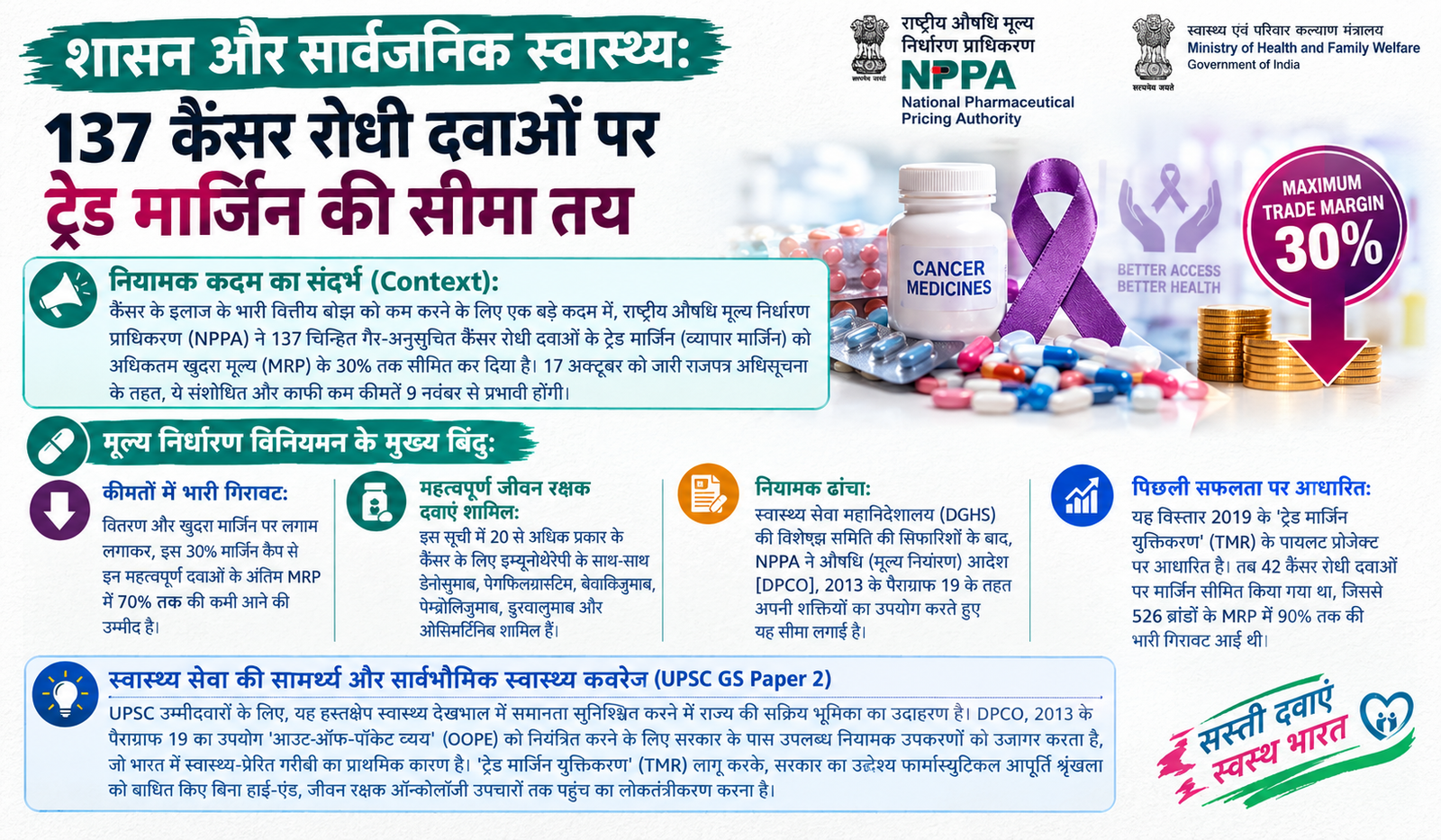
राष्ट्रीय औषधि मूल्य निर्धारण प्राधिकरण (NPPA) ने DPCO, 2013 के तहत 137 गैर-अनुसूचित कैंसर रोधी दवाओं के ट्रेड मार्जिन को 30% पर सीमित कर दिया है। इस कदम से 9 नवंबर से दवाओं की कीमतों में 70% तक की कमी आने की उम्मीद है।
कैंसर के इलाज के भारी वित्तीय बोझ को कम करने के लिए एक बड़े कदम में, राष्ट्रीय औषधि मूल्य निर्धारण प्राधिकरण (NPPA) ने 137 चिन्हित गैर-अनुसूचित कैंसर रोधी दवाओं के ट्रेड मार्जिन (व्यापार मार्जिन) को अधिकतम खुदरा मूल्य (MRP) के 30% तक सीमित कर दिया है। 17 अक्टूबर को जारी राजपत्र अधिसूचना के तहत, ये संशोधित और काफी कम कीमतें 9 नवंबर से प्रभावी होंगी।
- कीमतों में भारी गिरावट: वितरण और खुदरा मार्जिन (retail markups) पर लगाम लगाकर, इस 30% मार्जिन कैप से इन महत्वपूर्ण दवाओं के अंतिम MRP में 70% तक की कमी आने की उम्मीद है।
- महत्वपूर्ण जीवन रक्षक दवाएं शामिल: इस सूची में 20 से अधिक प्रकार के कैंसर के लिए महत्वपूर्ण इम्यूनोथेरेपी (Immunotherapies) के साथ-साथ व्यापक रूप से इस्तेमाल की जाने वाली दवाएं जैसे डेनोसुमाब (denosumab), पेगफिलग्रास्टिम (pegfilgrastim), बेवाकिज़ुमाब (bevacizumab), पेम्ब्रोलिज़ुमाब, डुरवालुमाब और ओसिमर्टिनिब शामिल हैं।
- नियामक ढांचा (Regulatory Framework): स्वास्थ्य सेवा महानिदेशालय (DGHS) की विशेषज्ञ समिति की सिफारिशों के बाद, NPPA ने औषधि (मूल्य नियंत्रण) आदेश [DPCO], 2013 के पैराग्राफ 19 के तहत अपनी शक्तियों का उपयोग करते हुए यह सीमा लगाई है।
- पिछली सफलता पर आधारित: यह विस्तार 2019 के 'ट्रेड मार्जिन युक्तिकरण' (Trade Margin Rationalisation) के बेहद सफल पायलट प्रोजेक्ट पर आधारित है। तब 42 कैंसर रोधी दवाओं पर मार्जिन सीमित किया गया था, जिससे 526 ब्रांडों के MRP में 90% तक की भारी गिरावट आई थी।
UPSC उम्मीदवारों के लिए, यह हस्तक्षेप स्वास्थ्य देखभाल में समानता (equity) सुनिश्चित करने में राज्य की सक्रिय भूमिका का उदाहरण है। DPCO, 2013 के पैराग्राफ 19 का उपयोग 'आउट-ऑफ-पॉकेट व्यय' (OOPE) को नियंत्रित करने के लिए सरकार के पास उपलब्ध नियामक उपकरणों को उजागर करता है, जो भारत में स्वास्थ्य-प्रेरित गरीबी का प्राथमिक कारण है। 'ट्रेड मार्जिन युक्तिकरण' (TMR) लागू करके, सरकार का उद्देश्य फार्मास्युटिकल आपूर्ति श्रृंखला को पूरी तरह से बाधित किए बिना हाई-एंड, जीवन रक्षक ऑन्कोलॉजी उपचारों (oncology treatments) तक पहुंच का लोकतंत्रीकरण करना है।
Governance & Public Health: Govt Caps Trade Margins on 137 Anti-Cancer Drugs at 30%
19 Oct 2026
The National Pharmaceutical Pricing Authority (NPPA) has capped trade margins on 137 non-scheduled anti-cancer drugs at 30% under the DPCO, 2013. This major health intervention is expected to reduce MRPs by up to 70% effective November 9.
In a major move to ease the massive financial burden of cancer treatments, the National Pharmaceutical Pricing Authority (NPPA) has capped the trade margins on 137 identified non-scheduled anti-cancer drugs at 30% of their Maximum Retail Price (MRP). Notified on October 17, these revised, significantly lower prices will come into effect on November 9.
- Massive Price Drop: By curbing excessive distribution and retail markups, the 30% margin cap is expected to slash the final MRP of these critical medicines by up to 70%.
- Crucial Lifesaving Drugs Covered: The list includes vital immunotherapies for over 20 cancer types, alongside widely used medicines like denosumab (breast/prostate cancer), pegfilgrastim (preventing neutropenia), bevacizumab (colon/ovarian/cervical cancers), pembrolizumab, durvalumab, and osimertinib.
- Statutory Framework: The NPPA imposed this cap invoking the extraordinary powers under Paragraph 19 of the Drugs (Prices Control) Order [DPCO], 2013, following recommendations from a Directorate General of Health Services (DGHS) expert committee.
- Building on Past Success: This expansion builds upon the highly successful 2019 pilot Trade Margin Rationalisation exercise, which previously capped margins on 42 anti-cancer drugs, plummeting the MRPs of 526 brands by up to 90%.
For UPSC aspirants, this intervention exemplifies the state's active role in ensuring healthcare equity. The use of Paragraph 19 of DPCO, 2013 highlights the regulatory tools available to the government to control Out-of-Pocket Expenditure (OOPE), which is the primary cause of health-induced poverty in India. By imposing Trade Margin Rationalization (TMR), the government aims to democratize access to high-end, life-saving oncology treatments without completely disrupting the pharmaceutical supply chain.
Trending Current Affairs
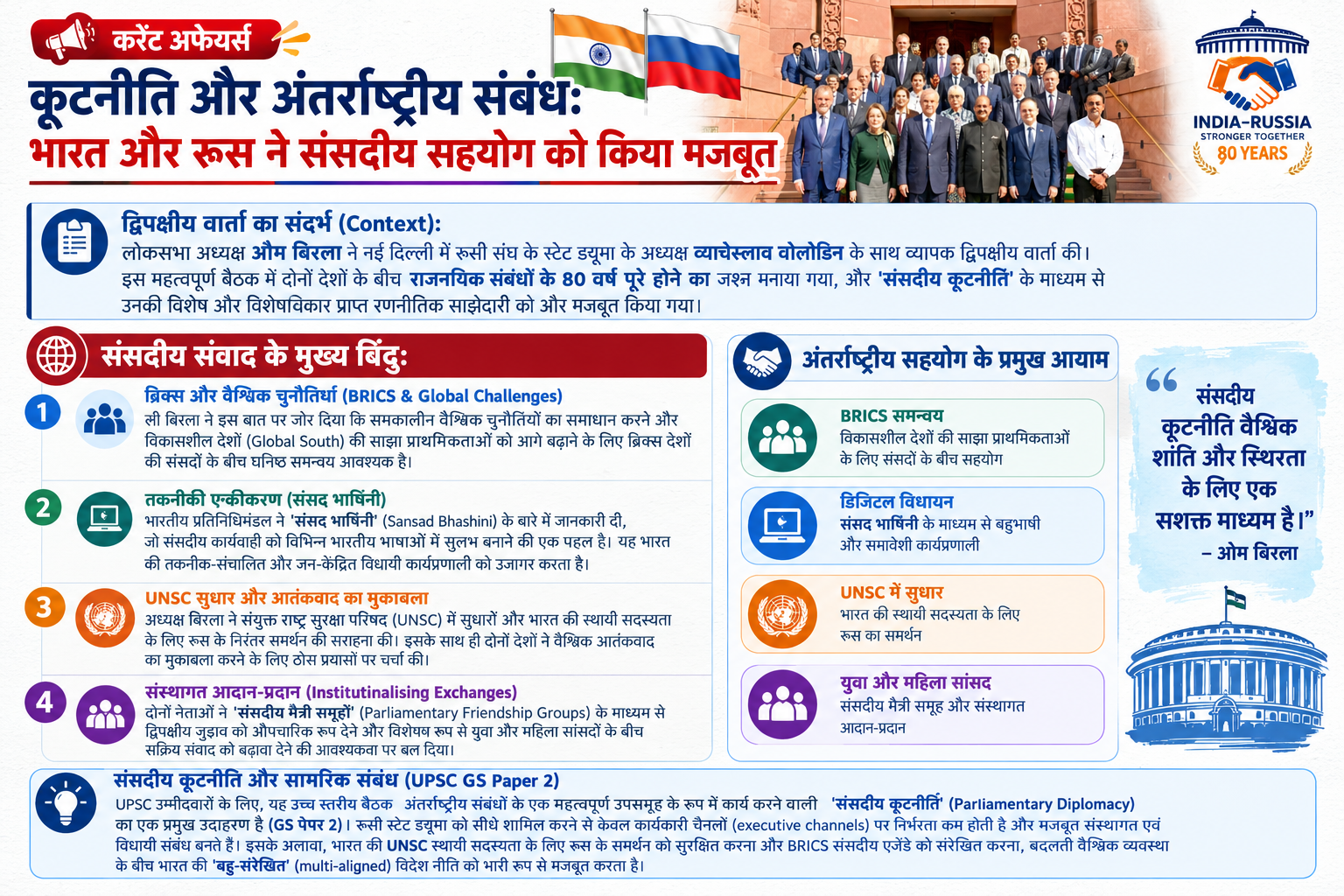
कूटनीति और अंतर्राष्ट्रीय संबंध: लोकसभा अध्यक्ष ओम बिरला और रूसी स्टेट ड्यूमा के अध्यक्ष के बीच द्विपक्षीय वार्ता
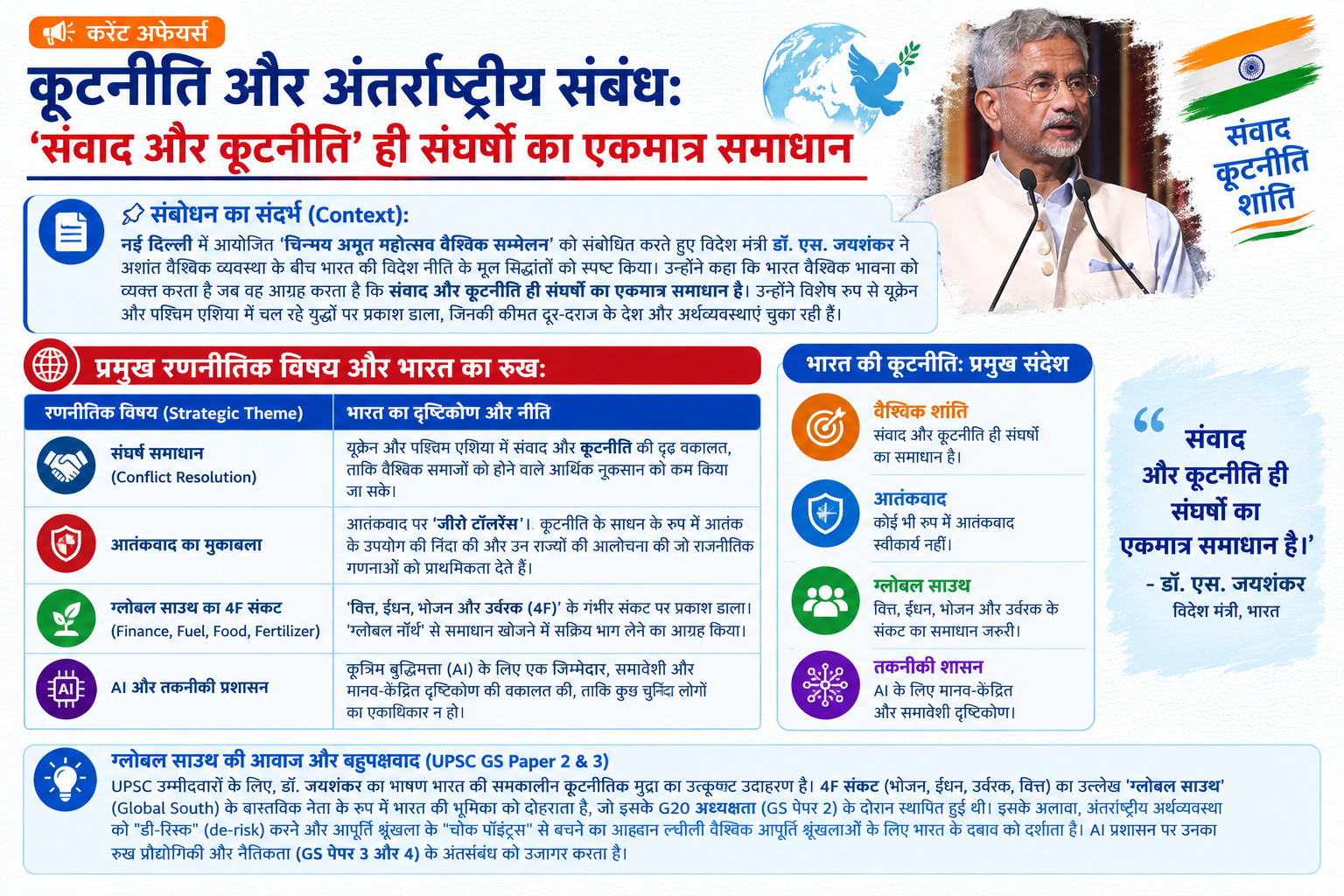
कूटनीति और अंतर्राष्ट्रीय संबंध: 'संवाद और कूटनीति' ही वैश्विक संघर्षों का एकमात्र समाधान - विदेश मंत्री जयशंकर