अर्थव्यवस्था और शासन: पीएम मोदी ने GST परिषद के नए सुधारों का किया स्वागत
09 Oct 2026
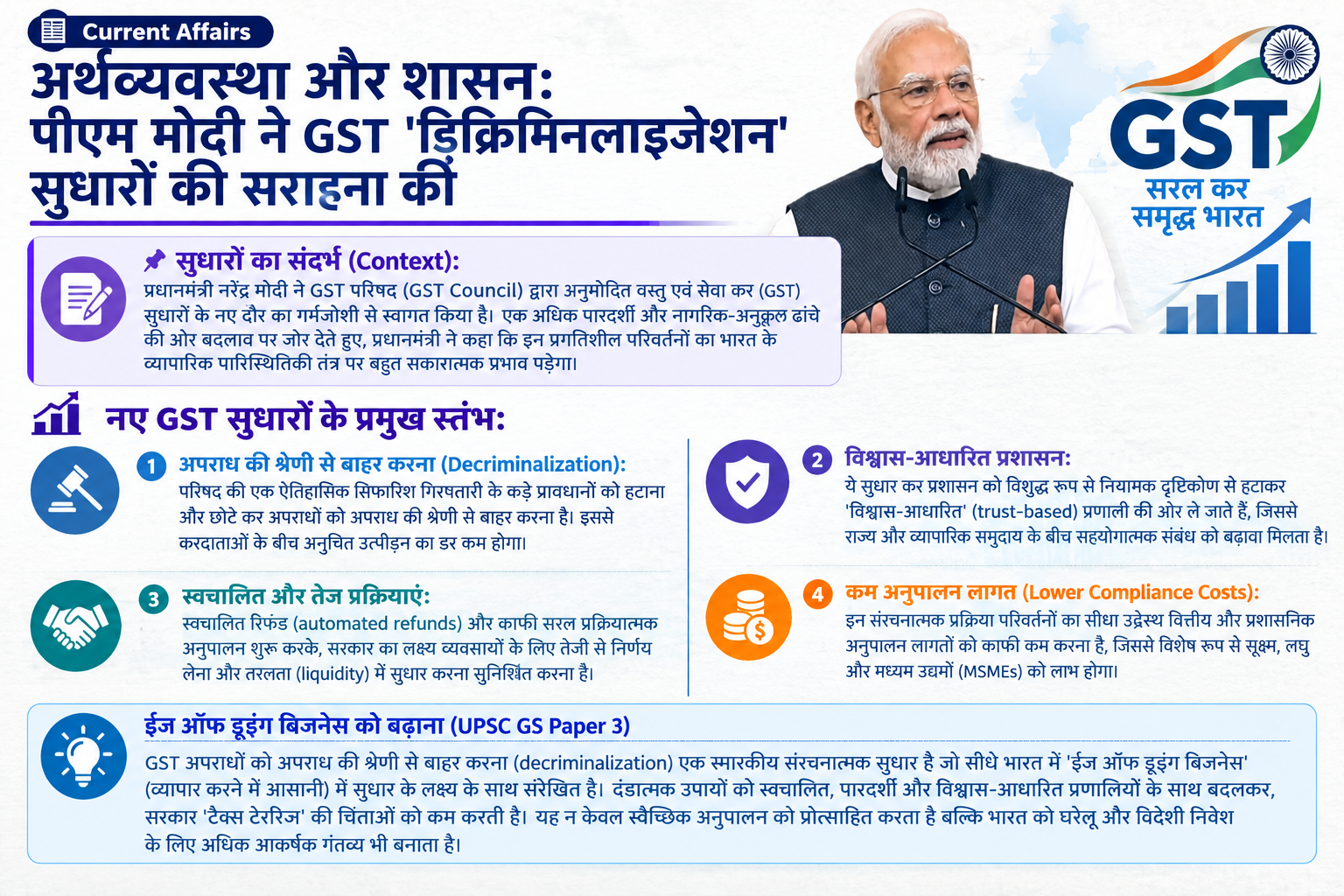
पीएम नरेंद्र मोदी ने GST परिषद के नवीनतम सुधारों की सराहना की, जिसमें गिरफ्तारी के प्रावधानों को हटाना, अपराधों को अपराध की श्रेणी से बाहर करना (decriminalization) और स्वचालित रिफंड शामिल हैं, जो एक 'विश्वास-आधारित' कर प्रणाली की दिशा में प्रमुख कदम हैं।
प्रधानमंत्री नरेंद्र मोदी ने GST परिषद (GST Council) द्वारा अनुमोदित वस्तु एवं सेवा कर (GST) सुधारों के नए दौर का गर्मजोशी से स्वागत किया है। एक अधिक पारदर्शी और नागरिक-अनुकूल ढांचे की ओर बदलाव पर जोर देते हुए, प्रधान मंत्री ने कहा कि इन प्रगतिशील परिवर्तनों का भारत के व्यापारिक पारिस्थितिकी तंत्र पर बहुत सकारात्मक प्रभाव पड़ेगा।
- अपराध की श्रेणी से बाहर करना (Decriminalization): परिषद की एक ऐतिहासिक सिफारिश गिरफ्तारी के कड़े प्रावधानों को हटाना और छोटे कर अपराधों को अपराध की श्रेणी से बाहर करना है। इससे करदाताओं के बीच अनुचित उत्पीड़न का डर कम होगा।
- विश्वास-आधारित प्रशासन: ये सुधार कर प्रशासन को विशुद्ध रूप से नियामक दृष्टिकोण से हटाकर 'विश्वास-आधारित' (trust-based) प्रणाली की ओर ले जाते हैं, जिससे राज्य और व्यापारिक समुदाय के बीच सहयोगात्मक संबंध को बढ़ावा मिलता है।
- स्वचालित और तेज प्रक्रियाएं: स्वचालित रिफंड (automated refunds) और काफी सरल प्रक्रियात्मक अनुपालन शुरू करके, सरकार का लक्ष्य व्यवसायों के लिए तेजी से निर्णय लेना और तरलता (liquidity) में सुधार करना सुनिश्चित करना है।
- कम अनुपालन लागत (Lower Compliance Costs): इन संरचनात्मक प्रक्रिया परिवर्तनों का सीधा उद्देश्य वित्तीय और प्रशासनिक अनुपालन लागतों को काफी कम करना है, जिससे विशेष रूप से सूक्ष्म, लघु और मध्यम उद्यमों (MSMEs) को लाभ होगा।
GST अपराधों को अपराध की श्रेणी से बाहर करना (decriminalization) एक स्मारकीय संरचनात्मक सुधार है जो सीधे भारत में 'ईज ऑफ डूइंग बिजनेस' (व्यापार करने में आसानी) में सुधार के लक्ष्य के साथ संरेखित है। दंडात्मक उपायों को स्वचालित, पारदर्शी और विश्वास-आधारित प्रणालियों के साथ बदलकर, सरकार 'टैक्स टेररिज्म' की चिंताओं को कम करती है। यह न केवल स्वैच्छिक अनुपालन को प्रोत्साहित करता है बल्कि भारत को घरेलू और विदेशी निवेश के लिए अधिक आकर्षक गंतव्य भी बनाता है।
Economy & Governance: PM Modi Welcomes New Round of GST Reforms
09 Oct 2026
Prime Minister Narendra Modi hailed the GST Council's latest reforms, highlighting the removal of arrest provisions, greater decriminalization, and automated refunds as key steps toward a trust-based and citizen-friendly tax regime.
Prime Minister Narendra Modi warmly welcomed the sweeping new round of Goods and Services Tax (GST) reforms approved by the GST Council. Emphasizing a shift towards a more transparent and citizen-friendly framework, the Prime Minister noted that these progressive changes will yield a highly positive impact on India's business ecosystem.
- Decriminalization & Removal of Arrests: A landmark recommendation by the Council is the removal of stringent arrest provisions and a broader push for the decriminalization of minor tax offenses, reducing the fear of undue harassment among taxpayers.
- Trust-Based Administration: The reforms pivot the tax administration from a purely regulatory approach to a trust-based system, fostering a cooperative relationship between the state and the business community.
- Automated & Faster Processes: By introducing automated refunds and significantly simpler procedural compliance, the government aims to ensure faster decision-making and improved liquidity for businesses.
- Lower Compliance Costs: These structural process changes are directly aimed at drastically lowering the financial and administrative compliance costs, particularly benefiting Micro, Small, and Medium Enterprises (MSMEs).
The decriminalization of GST offenses is a monumental structural reform that directly aligns with the goal of improving the 'Ease of Doing Business' in India. By replacing punitive measures with automated, transparent, and trust-based systems, the government mitigates 'tax terrorism' concerns. This not only encourages voluntary compliance and rapid formalization of the informal sector but also makes India a much more attractive destination for domestic and foreign investments.