पर्यावरण: भारत ने COP31 से पहले लचीलेपन और यथार्थवाद का किया आह्वान
08 Oct 2026
फिजी में आयोजित 'प्री-COP31' बैठक में पर्यावरण मंत्री भूपेंद्र यादव ने वैश्विक समुदाय से बयानबाजी से आगे बढ़कर 1.5°C जलवायु लक्ष्य को लागू करने के लिए लचीलेपन, तकनीकी सहयोग और व्यावहारिक समाधानों का आग्रह किया।
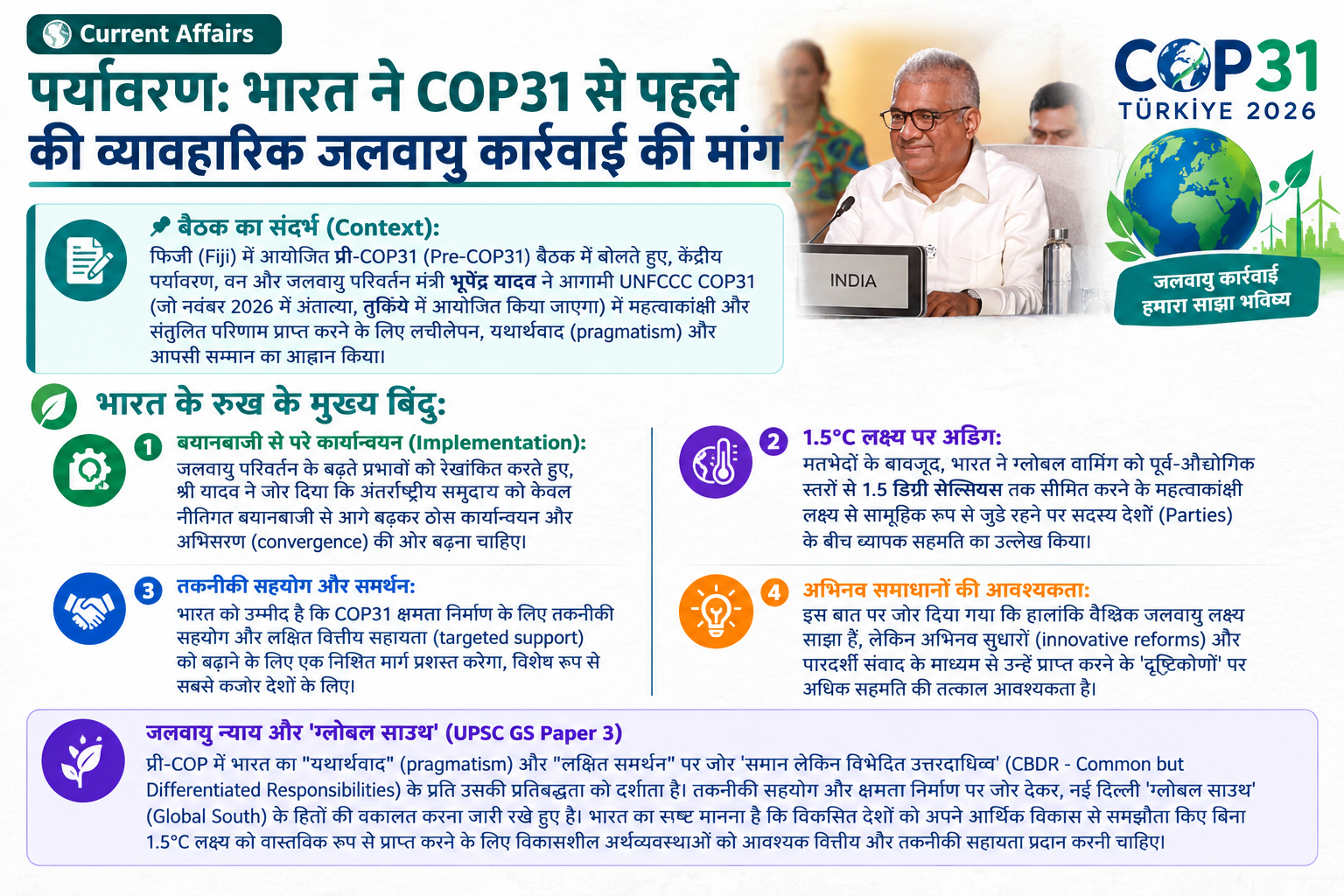
फिजी (Fiji) में आयोजित प्री-COP31 (Pre-COP31) बैठक में बोलते हुए, केंद्रीय पर्यावरण, वन और जलवायु परिवर्तन मंत्री भूपेंद्र यादव ने आगामी UNFCCC COP31 (जो नवंबर 2026 में अंताल्या, तुर्किये में आयोजित किया जाएगा) में महत्वाकांक्षी और संतुलित परिणाम प्राप्त करने के लिए लचीलेपन, यथार्थवाद (pragmatism) और आपसी सम्मान का आह्वान किया।
- बयानबाजी से परे कार्यान्वयन (Implementation): जलवायु परिवर्तन के बढ़ते प्रभावों को रेखांकित करते हुए, श्री यादव ने जोर दिया कि अंतर्राष्ट्रीय समुदाय को केवल नीतिगत बयानबाजी से आगे बढ़कर ठोस कार्यान्वयन और अभिसरण (convergence) की ओर बढ़ना चाहिए।
- 1.5°C लक्ष्य पर अडिग: मतभेदों के बावजूद, भारत ने ग्लोबल वार्मिंग को पूर्व-औद्योगिक स्तरों से 1.5 डिग्री सेल्सियस तक सीमित करने के महत्वाकांक्षी लक्ष्य से सामूहिक रूप से जुड़े रहने पर सदस्य देशों (Parties) के बीच व्यापक सहमति का उल्लेख किया।
- तकनीकी सहयोग और समर्थन: भारत को उम्मीद है कि COP31 क्षमता निर्माण के लिए तकनीकी सहयोग और लक्षित वित्तीय सहायता (targeted support) को बढ़ाने के लिए एक निश्चित मार्ग प्रशस्त करेगा, विशेष रूप से सबसे कमजोर देशों के लिए।
- अभिनव समाधानों की आवश्यकता: इस बात पर जोर दिया गया कि हालांकि वैश्विक जलवायु लक्ष्य साझा हैं, लेकिन अभिनव सुधारों (innovative reforms) और पारदर्शी संवाद के माध्यम से उन्हें प्राप्त करने के 'दृष्टिकोणों' पर अधिक सहमति की तत्काल आवश्यकता है।
प्री-COP में भारत का "यथार्थवाद" (pragmatism) और "लक्षित समर्थन" पर जोर 'समान लेकिन विभेदित उत्तरदायित्व' (CBDR - Common but Differentiated Responsibilities) के प्रति उसकी प्रतिबद्धता को दर्शाता है। तकनीकी सहयोग और क्षमता निर्माण पर जोर देकर, नई दिल्ली 'ग्लोबल साउथ' (Global South) के हितों की वकालत करना जारी रखे हुए है। भारत का स्पष्ट मानना है कि विकसित देशों को अपने आर्थिक विकास से समझौता किए बिना 1.5°C लक्ष्य को वास्तविक रूप से प्राप्त करने के लिए विकासशील अर्थव्यवस्थाओं को आवश्यक वित्तीय और तकनीकी सहायता प्रदान करनी चाहिए।
Environment: India Calls for Flexibility and Pragmatism Ahead of COP31
08 Oct 2026
At the Pre-COP31 meeting in Fiji, Environment Minister Bhupender Yadav urged the global community to move beyond rhetoric toward implementing the 1.5°C climate goal, advocating for technical cooperation ahead of COP31 in Antalya.
Speaking at the Pre-COP31 meeting in Fiji, Union Minister for Environment, Forest and Climate Change, Bhupender Yadav, called for flexibility, pragmatism, and mutual respect to secure ambitious outcomes at the upcoming UNFCCC COP31 (scheduled to be held in Antalya, Türkiye, in November 2026).
- Beyond Rhetoric to Implementation: Highlighting the intensifying impacts of global climate change, Mr. Yadav stressed that the international community must transition from mere policy rhetoric to concrete implementation and structural convergence.
- Anchored to 1.5°C Goal: Despite differences, India noted a broad consensus among member Parties to remain collectively anchored to the aspirational goal of limiting global warming to 1.5 degrees Celsius above pre-industrial levels.
- Technical Cooperation & Support: India expects COP31 to chart a definitive pathway for enhanced engagement, technical cooperation, and targeted financial support for building climate resilience capabilities, particularly for the most vulnerable nations.
- Need for Innovative Solutions: Emphasizing that while global climate goals are shared, greater convergence is urgently required on the approaches to achieving them through innovative reforms and transparent dialogues.
India’s emphasis on "pragmatism" and "targeted support" at the Pre-COP reflects its enduring commitment to Common but Differentiated Responsibilities (CBDR). By pushing for technical cooperation and capacity building, New Delhi continues to champion the cause of the Global South, insisting that developed nations must provide the necessary financial and technological backing to developing economies to realistically achieve the 1.5°C target without compromising their economic growth.