अर्थव्यवस्था और शासन: वित्त मंत्री निर्मला सीतारमण ने 57वीं GST परिषद की बैठक की अध्यक्षता की
08 Oct 2026
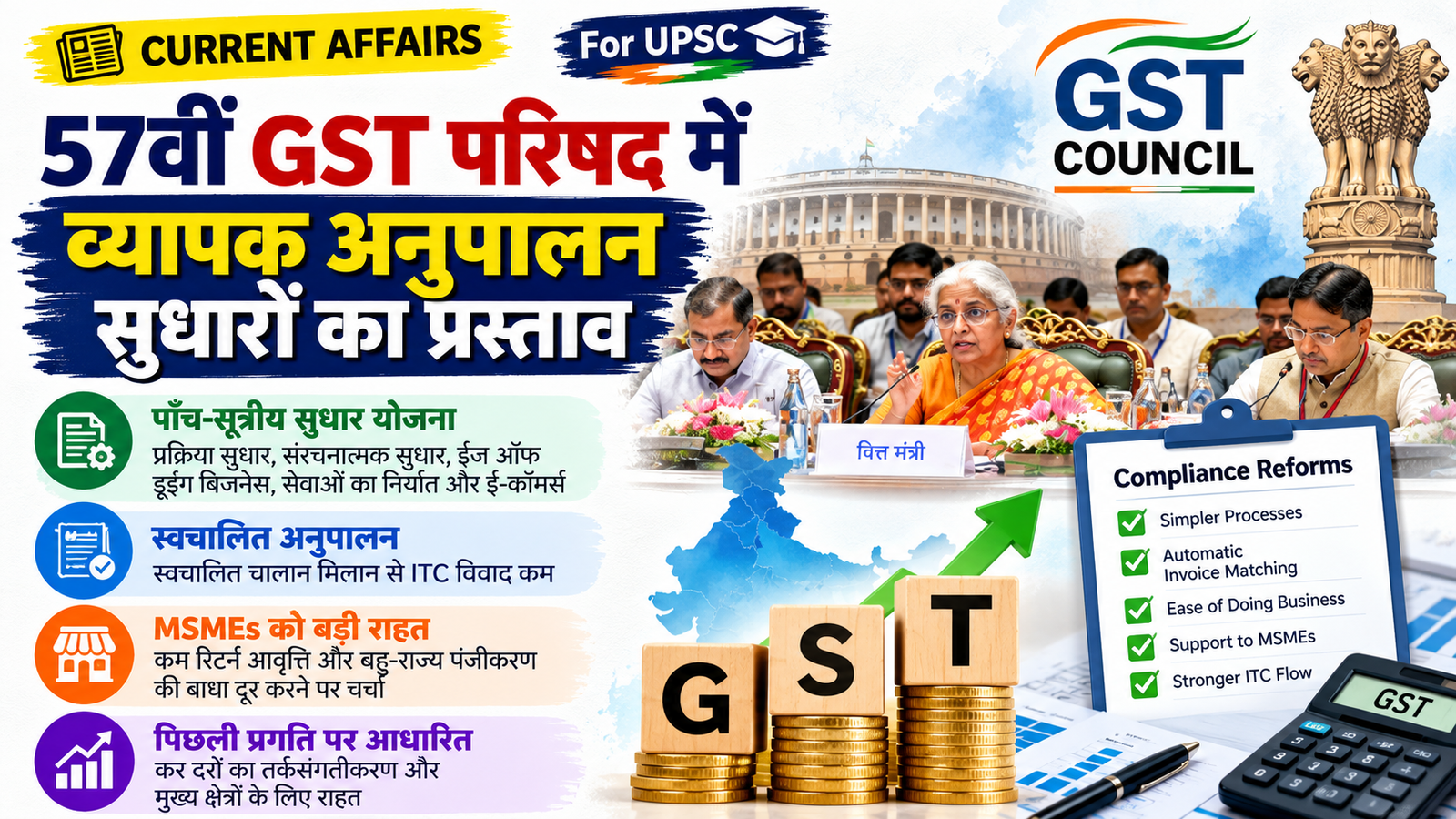
केंद्रीय वित्त मंत्री निर्मला सीतारमण ने नई दिल्ली में 57वीं GST परिषद की बैठक की अध्यक्षता की। इसमें छोटे व्यवसायों के लिए अनुपालन (compliance) को आसान बनाने और स्वचालित चालान मिलान (automatic invoice matching) के लिए पांच-सूत्रीय सुधार योजना पेश की गई।
केंद्रीय वित्त मंत्री निर्मला सीतारमण की अध्यक्षता में नई दिल्ली के भारत मंडपम में 57वीं GST परिषद (GST Council) की बैठक आयोजित की गई। इस उच्च स्तरीय बैठक में महाराष्ट्र, कर्नाटक, जम्मू-कश्मीर और हरियाणा सहित विभिन्न राज्यों के मुख्यमंत्रियों और वित्त मंत्रियों ने भाग लिया। इसका मुख्य उद्देश्य GST विवादों को हल करना और 'इनपुट टैक्स क्रेडिट' (ITC) प्रवाह में सुधार करना था।
- व्यापक सुधार रणनीति: सरकार ने प्रशासनिक बाधाओं को दूर करने के लिए एक मजबूत पांच-सूत्रीय योजना का प्रस्ताव दिया, जिसमें प्रक्रिया सुधार (process reforms), संरचनात्मक सुधार, ईज ऑफ लिविंग एंड डूइंग बिजनेस, सेवाओं का निर्यात और ई-कॉमर्स शामिल हैं।
- स्वचालित अनुपालन (Automated Compliance): एक बड़ा बदलाव खरीदारों और विक्रेताओं के बीच स्वचालित चालान मिलान (automatic invoice matching) की शुरुआत है। यह 'इनपुट टैक्स क्रेडिट' (ITC) का दावा करने से जुड़े कागजी कार्रवाई और विवादों को काफी कम कर देगा।
- MSMEs को बड़ी राहत: छोटे व्यवसायों पर अनुपालन के बोझ को काफी कम करने के लिए, परिषद ने रिटर्न दाखिल करने की आवृत्ति (frequency) को कम करने और 'बहु-राज्य पंजीकरण' (multi-state registrations) की बोझिल आवश्यकता को दूर करने पर चर्चा की।
- पिछली प्रगति पर आधारित: यह बैठक पिछले साल सितंबर में हुई 56वीं बैठक की नींव पर आधारित है, जिसमें श्रम-गहन उद्योगों, कृषि और स्वास्थ्य सेवा के लिए कर दरों को तर्कसंगत बनाने (rate rationalization) पर भारी ध्यान केंद्रित किया गया था।
57वीं GST परिषद की बैठक 'कर युक्तिकरण' (tax rationalization) से 'करदाता सुविधा' (taxpayer facilitation) में एक महत्वपूर्ण संक्रमण का प्रतीक है। MSMEs के लिए स्वचालित चालान मिलान लागू करके और बहु-राज्य पंजीकरण बाधाओं को दूर करके, सरकार सीधे अनुपालन लागत (cost of compliance) को कम कर रही है। यह अनौपचारिक क्षेत्र के तेजी से औपचारीकरण (formalization) को प्रोत्साहित करेगा, ITC रिसाव को रोकेगा और 'ईज ऑफ डूइंग बिजनेस' इंडेक्स में भारत की रैंकिंग को बढ़ावा देगा।
Economy & Governance: FM Nirmala Sitharaman Chairs 57th GST Council Meeting
08 Oct 2026
Union Finance Minister Nirmala Sitharaman chaired the 57th GST Council meeting in New Delhi, introducing a transformative five-pronged reform plan to automate invoice matching, streamline input tax credit (ITC), and drastically reduce compliance burdens for MSMEs.
The 57th GST Council meeting was held at Bharat Mandapam in New Delhi, chaired by Union Finance Minister Nirmala Sitharaman. The high-level meeting was attended by Chief Ministers from various states, including Maharashtra, Karnataka, J&K, and Haryana, along with State Finance Ministers, focusing heavily on resolving ongoing GST disputes and improving the Input Tax Credit (ITC) flow.
- Comprehensive Reform Strategy: The government proposed a robust five-pronged plan covering process reforms, structural reforms, ease of living and doing business, exports of services, and e-commerce to eliminate administrative bottlenecks.
- Automated Compliance: A major shift is the introduction of automatic invoice matching between buyers and sellers, which will significantly reduce the paperwork and friction currently associated with claiming Input Tax Credits (ITC).
- Massive Relief for MSMEs: To drastically lower the compliance burden on small businesses, the Council discussed reducing the frequency of return filings and removing the cumbersome requirement of multi-state registrations.
- Building on Past Progress: This meeting builds upon the foundation of the 56th meeting held in September last year, which heavily focused on rate rationalization for labor-intensive industries, agriculture, and healthcare.
The 57th GST Council meeting marks a critical transition from 'tax rationalization' to 'taxpayer facilitation'. By automating invoice matching and removing multi-state registration hurdles for MSMEs, the government is directly lowering the cost of compliance. This will inherently encourage the rapid formalization of the informal sector, prevent ITC leakages, and boost India's global ranking in the Ease of Doing Business index.