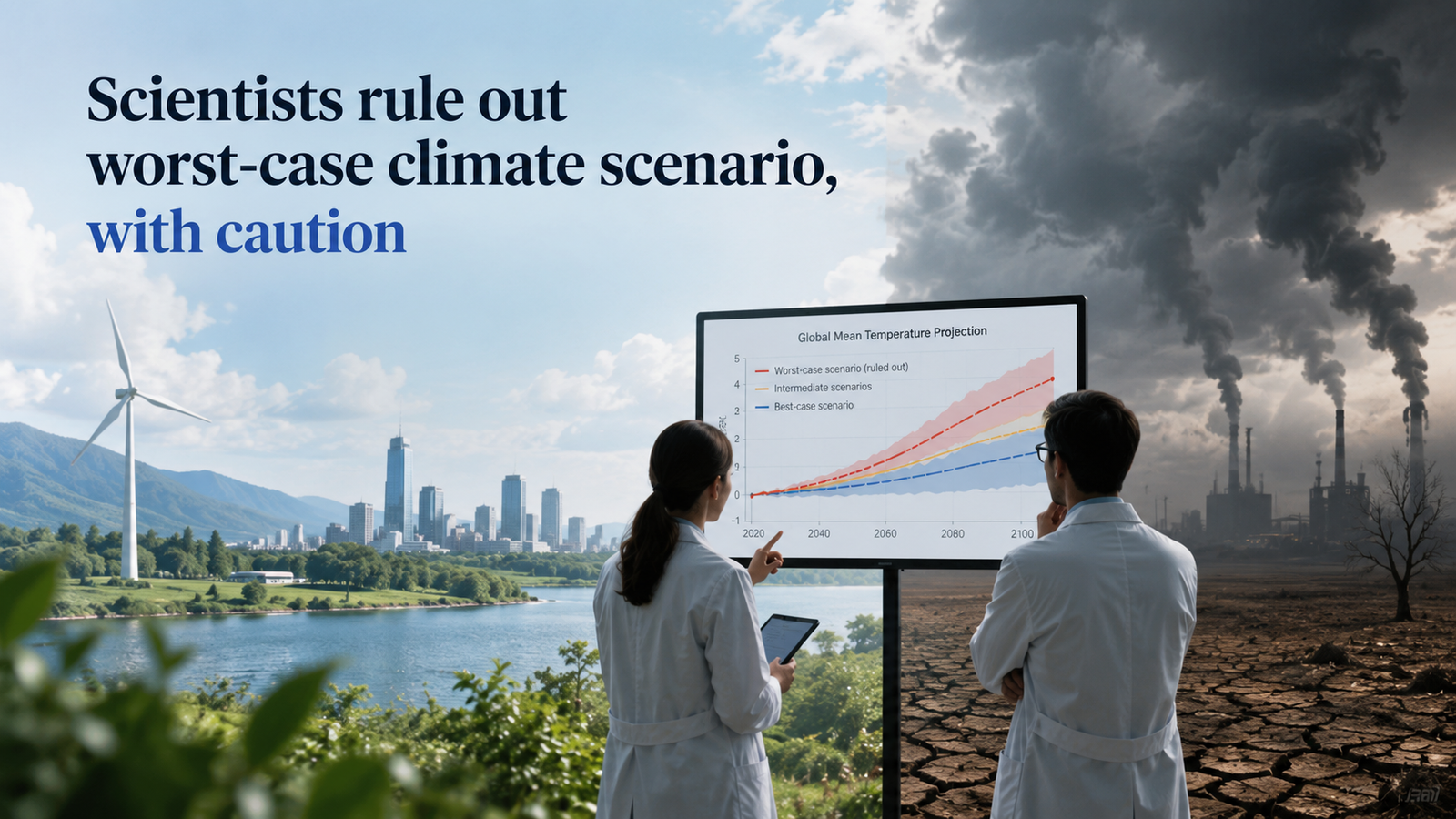
नई जलवायु रिपोर्ट में अत्यधिक ग्लोबल वार्मिंग की आशंका खारिज, लेकिन वैज्ञानिकों ने अभी भी कार्रवाई की दी चेतावनी
07 Jun 2026
वैज्ञानिकों के अनुसार अब सबसे खतरनाक “डूम्सडे” क्लाइमेट सीनारियो की संभावना कम हो गई है, क्योंकि दुनिया में रिन्यूएबल एनर्जी और क्लाइमेट पॉलिसी तेजी से बढ़ रही हैं। फिर भी, ग्लोबल वार्मिंग का खतरा अभी भी गंभीर बना हुआ है और मजबूत कदम उठाना जरूरी है।
उन्नत जलवायु विज्ञान (Advanced Climate Science)
एक गहरा अध्ययन: ओवरशूट, संवेदनशीलता और फीडबैक लूप्स
1. 'ओवरशूट' (Overshoot) की प्रक्रिया
पेरिस समझौते ने ग्लोबल वार्मिंग को पूर्व-औद्योगिक स्तरों से 1.5°C ऊपर तक सीमित करने का लक्ष्य रखा था। हालांकि, जीवाश्म ईंधन (fossil fuels) के इस्तेमाल को धीमा करने में देरी के कारण, शेष "कार्बन बजट" (CO₂ की वह मात्रा जो हम उस तापमान तक पहुंचने से पहले उत्सर्जित कर सकते हैं) लगभग समाप्त हो चुका है।
ओवरशूट कैसे काम करता है:
चरण 1 (सीमा पार करना - The Breach): वैश्विक तापमान 1.5°C की सीमा को पार कर जाता है, जो मध्य शताब्दी तक 1.7°C या 1.8°C तक पहुंच सकता है। यह गंभीर, अस्थायी पर्यावरणीय प्रभावों को जन्म देता है।
चरण 2 (नेट-नेगेटिव - Net-Negative): मानवता को न केवल "नेट जीरो" उत्सर्जन तक पहुंचना होगा बल्कि "नेट नेगेटिव" होना पड़ेगा। इसके लिए तकनीक (जैसे Direct Air Capture) और प्रकृति (वनीकरण) का उपयोग करके वायुमंडल से अरबों टन कार्बन निकालना होगा।
चरण 3 (कूलिंग - Cooling): यदि कार्बन को हटाना सफल होता है, तो वायुमंडलीय सांद्रता (concentration) गिर जाती है, और वर्ष 2100 तक वैश्विक तापमान वापस 1.5°C से नीचे आ जाता है।
खतरा: अस्थायी ओवरशूट चरण के दौरान, हम अपरिवर्तनीय पर्यावरणीय घटनाओं (जैसे मूंगा चट्टानों / coral reefs का नष्ट होना या बर्फ की चादर का पिघलना) को ट्रिगर करने का जोखिम उठाते हैं, जिसे तापमान कम होने पर भी वापस ठीक नहीं किया जा सकता।
2. 'जलवायु संवेदनशीलता' (Climate Sensitivity) का रहस्य
भले ही सबसे खराब मानव उत्सर्जन परिदृश्य (RCP8.5) को अब अवास्तविक मानकर हटा दिया गया है, फिर भी हम संतुलन जलवायु संवेदनशीलता (Equilibrium Climate Sensitivity - ECS) नामक फैक्टर के कारण RCP8.5-स्तर के उच्च तापमान का सामना कर सकते हैं।
ECS इस बात का माप है कि यदि वायुमंडल में CO₂ की मात्रा ठीक दोगुनी हो जाती है तो पृथ्वी की जलवायु कितनी गर्म होगी। दशकों तक, वैज्ञानिकों का अनुमान था कि यह संख्या लगभग 3°C थी। हालांकि, हालिया डेटा बताता है कि पृथ्वी हमारी सोच से कहीं अधिक संवेदनशील हो सकती है।
यदि ECS कम है: हमारी वर्तमान नीतियां वार्मिंग को 2°C के करीब सीमित रख सकती हैं।
यदि ECS उच्च है:समान उत्सर्जन भी वार्मिंग को 3°C या 4°C के पार धकेल सकता है, जो कि मानव नीतियों से पूरी तरह स्वतंत्र होगा।
3. घातक चक्र: फीडबैक लूप्स (Feedback Loops)
यदि जलवायु संवेदनशीलता उच्च है, तो इसका मुख्य कारण सकारात्मक फीडबैक लूप्स (Positive Feedback Loops) होते हैं। ये प्राकृतिक श्रृंखला प्रतिक्रियाएं (chain reactions) हैं जहां ग्लोबल वार्मिंग ऐसे परिवर्तन लाती है जो अंततः और भी अधिक वार्मिंग का कारण बनते हैं।
एल्बिडो प्रभाव (The Albedo Effect): बर्फ सफेद होती है और सूरज की गर्मी को वापस अंतरिक्ष में परावर्तित (reflect) कर देती है। जैसे-जैसे ग्रह गर्म होता है, बर्फ पिघलती है, जिससे गहरे रंग का समुद्र या जमीन दिखाई देने लगती है। गहरी सतहें गर्मी को सोख लेती हैं, जिससे तापमान और बढ़ता है, और फिर और अधिक बर्फ पिघलती है।
पर्माफ्रॉस्ट का पिघलना (Permafrost Thaw): आर्कटिक में जमी हुई मिट्टी (पर्माफ्रॉस्ट) में फंसा हुआ कार्बन और मीथेन (CO₂ से 80 गुना अधिक शक्तिशाली ग्रीनहाउस गैस) भारी मात्रा में होता है। गर्मी से जब यह मिट्टी पिघलती है, तो इन गैसों को वायुमंडल में छोड़ती है, जो ग्लोबल वार्मिंग को तेजी से बढ़ाती है।
जंगलों का विनाश (Forest Dieback): वार्मिंग के कारण बढ़ता सूखा अमेज़ॅन जैसे विशाल जंगलों को सुखा देता है। इससे भयंकर जंगल की आग (wildfires) लगती है। कार्बन सोखने के बजाय, जलते हुए जंगल दशकों से जमा कार्बन को वापस हवा में छोड़ देते हैं।
New Climate Study Rules Out Extreme Warming Scenario, Experts Still Urge Action
07 Jun 2026
Scientists say the worst-case climate disaster scenario is now unlikely, thanks to renewable energy growth and climate policies. However, the world still faces dangerous global warming unless stronger action is taken.
Advanced Climate Dynamics
A Deeper Look: Overshoot, Sensitivity, & Feedback Loops
1. The Mechanics of "Overshoot"
The Paris Agreement set a target to limit global warming to 1.5°C above pre-industrial levels. However, due to the slow phase-out of fossil fuels, the remaining "carbon budget" (the amount of CO₂ we can emit before hitting that temperature) is almost exhausted.
How an Overshoot Works:
Phase 1 (The Breach): Global temperatures exceed the 1.5°C limit, potentially reaching 1.7°C or 1.8°C by mid-century. This triggers severe, temporary environmental impacts.
Phase 2 (Net-Negative): Humanity must not only reach "Net Zero" emissions but go "Net Negative." This requires pulling billions of tons of carbon out of the atmosphere using technology (like Direct Air Capture) and nature (reforestation).
Phase 3 (Cooling): If carbon removal is successful, the atmospheric concentration drops, and the global temperature cools back down below 1.5°C by the year 2100.
The danger: During the temporary overshoot phase, we risk triggering irreversible tipping points (like coral reef death or ice sheet collapse) that cannot be undone even if temperatures later cool down.
2. The "Climate Sensitivity" Unknown
Even though the worst-case human emission scenario (RCP8.5) is retired, we could still face RCP8.5-level temperatures due to a variable called Equilibrium Climate Sensitivity (ECS).
ECS is the measure of how much the Earth's climate will warm if the concentration of CO₂ in the atmosphere exactly doubles. For decades, scientists estimated this number was around 3°C. However, recent data suggests the Earth might be much more sensitive than we thought.
If ECS is low: Our current policies might keep warming closer to 2°C.
If ECS is high: The exact same emissions could drive warming past 3°C or 4°C, completely independent of human policy changes.
3. Vicious Cycles: Feedback Loops
If Climate Sensitivity is high, it is usually because of positive feedback loops. These are natural chain reactions where warming causes changes that lead to even more warming.
The Albedo Effect: Ice is white and reflects the sun's heat back into space. As the planet warms, ice melts, revealing dark ocean water or land. Dark surfaces absorb heat, causing more warming, which melts more ice.
Permafrost Thaw: Frozen soil in the Arctic holds massive amounts of trapped carbon and methane (a greenhouse gas 80x more potent than CO₂). As it warms, the soil thaws, releasing these gases, which rapidly accelerates global warming, thawing more permafrost.
Forest Dieback: Droughts (caused by a warming baseline of 2.5°C) dry out forests like the Amazon. This leads to massive wildfires. Instead of absorbing carbon, burning forests release decades of stored carbon back into the sky.