स्वास्थ्य और शासन: भारत ने 2030 तक हेपेटाइटिस बी और सी को खत्म करने की प्रतिबद्धता जताई
23 Sep 2026
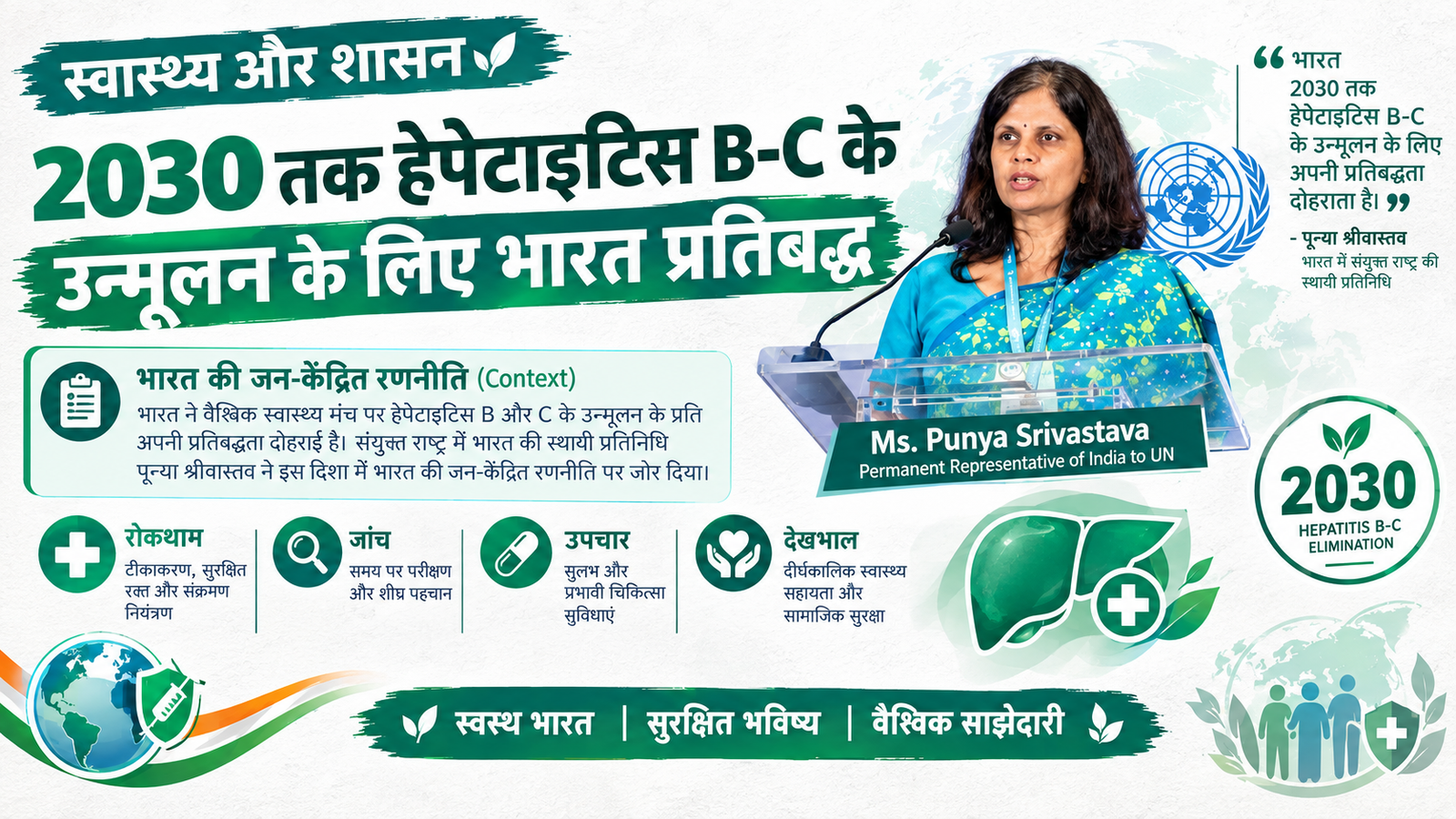
81वीं संयुक्त राष्ट्र महासभा (UNGA) में, केंद्रीय स्वास्थ्य सचिव पुण्य सलिला श्रीवास्तव ने व्यापक जांच और मुफ्त उपचार के माध्यम से 2030 तक हेपेटाइटिस बी और सी को खत्म करने के भारत के लक्ष्य की पुष्टि की।
न्यूयॉर्क में 81वीं संयुक्त राष्ट्र महासभा (UNGA) के एक 'साइड इवेंट' को संबोधित करते हुए, केंद्रीय स्वास्थ्य सचिव पुण्य सलिला श्रीवास्तव ने 2030 तक सार्वजनिक स्वास्थ्य खतरे के रूप में हेपेटाइटिस बी और सी (Hepatitis B and C) को समाप्त करने के लिए भारत की प्रतिबद्धता की पुष्टि की।
- जन-केंद्रित प्रतिक्रिया: भारत एक व्यापक और बहुआयामी दृष्टिकोण अपना रहा है, जिसमें रोकथाम (prevention), कठोर जांच (screening), सटीक निदान, उपचार और निरंतर देखभाल शामिल है।
- महत्वपूर्ण हस्तक्षेप: इस रणनीति में प्रसवपूर्व जांच (antenatal screening), हेपेटाइटिस बी टीकाकरण अभियान, सुरक्षित रक्त आधान (blood transfusion) सेवाएं, और प्रभावित व्यक्तियों के लिए मुफ्त निदान और उपचार का प्रावधान शामिल है।
- पुनर्वास सहायता (Rehabilitation): संवेदनशील और उच्च जोखिम वाले समूहों पर विशेष ध्यान दिया जा रहा है, जिसमें नशीली दवाओं का इंजेक्शन लेने वाले लोगों के लिए लक्षित परामर्श और पुनर्वास सहायता शामिल है।
- वैश्विक कार्रवाई का आह्वान: स्वास्थ्य सचिव ने 2030 के महत्वाकांक्षी लक्ष्यों को पूरा करने के लिए निरंतर वैश्विक सहयोग, स्वास्थ्य संसाधनों तक समान पहुंच और दुनिया भर में मजबूत स्वास्थ्य प्रणालियों की आवश्यकता पर जोर दिया।
वायरल हेपेटाइटिस का उन्मूलन वैश्विक SDG 3 (अच्छा स्वास्थ्य और कल्याण) का एक मुख्य घटक है। हेपेटाइटिस देखभाल को अपने 'यूनिवर्सल हेल्थ कवरेज' ढांचे में एकीकृत करके और मुफ्त उपचार के माध्यम से मरीजों की जेब पर पड़ने वाले खर्च को कम करके, भारत 'ग्लोबल साउथ' के लिए एक प्रभावशाली सार्वजनिक स्वास्थ्य मॉडल स्थापित कर रहा है।
Health & Governance: India Commits to Eliminating Hepatitis B & C by 2030
23 Sep 2026
At the 81st UN General Assembly, Union Health Secretary Punya Salila Srivastava reaffirmed India's goal to eliminate Hepatitis B and C as public health threats by 2030 through comprehensive screening and free treatments.
Addressing a side event at the 81st session of the UN General Assembly (UNGA) in New York, Union Health Secretary Punya Salila Srivastava reaffirmed India’s commitment to combating Viral Hepatitis, explicitly targeting the elimination of Hepatitis B and C as public health threats by 2030.
- People-Centered Response: India is deploying a comprehensive, multi-pronged approach that spans across prevention, rigorous screening, accurate diagnosis, treatment, and sustained care.
- Critical Interventions: The strategy integrates antenatal screening, robust Hepatitis B immunization drives, safe blood transfusion services, and the provision of free diagnosis and treatment for affected individuals.
- Rehabilitation Support: Special focus is being placed on vulnerable and high-risk groups, including targeted counseling and rehabilitation support for people who inject drugs.
- Call for Global Action: The Health Secretary emphasized the necessity of sustained global cooperation, equitable access to healthcare resources, and stronger health systems worldwide to meet the ambitious 2030 targets.
Eradicating Viral Hepatitis is a core component of the global SDG 3 (Good Health and Well-being). By integrating Hepatitis care into its universal health coverage framework and alleviating the out-of-pocket expenditure through free treatments, India is establishing a replicable, high-impact public health model for the Global South.