अर्थव्यवस्था और तकनीक: 2035 तक $200 बिलियन का होगा भारत का सेमीकंडक्टर बाजार - रिपोर्ट
22 Sep 2026
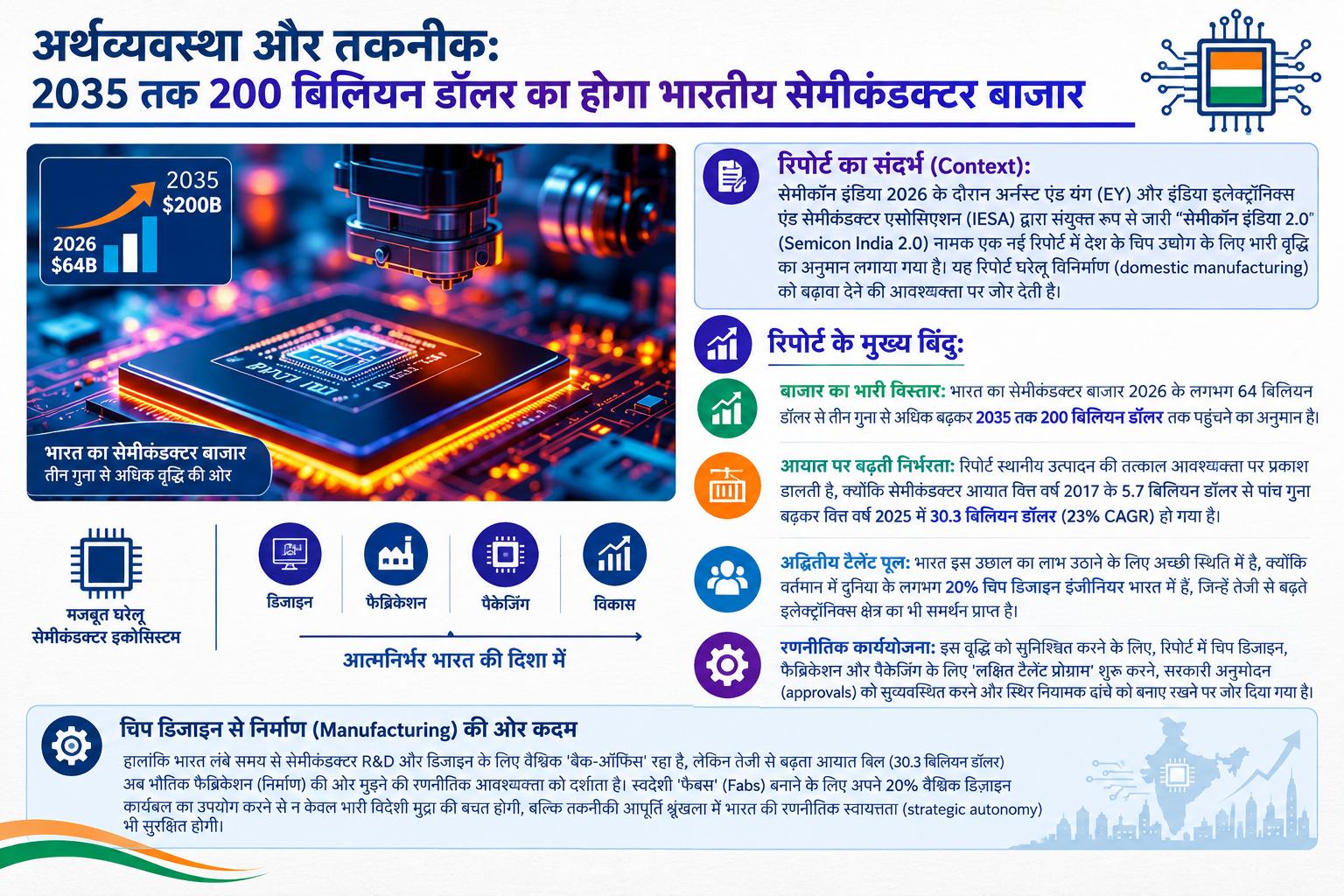
EY और IESA की 'सेमीकॉन इंडिया 2.0' रिपोर्ट के अनुसार, भारत का सेमीकंडक्टर बाजार 2035 तक तीन गुना बढ़कर 200 बिलियन डॉलर तक पहुंचने का अनुमान है। भारत में दुनिया के 20% चिप डिज़ाइन इंजीनियर मौजूद हैं।
सेमीकॉन इंडिया 2026 के दौरान अर्नस्ट एंड यंग (EY) और इंडिया इलेक्ट्रॉनिक्स एंड सेमीकंडक्टर एसोसिएशन (IESA) द्वारा संयुक्त रूप से जारी "सेमीकॉन इंडिया 2.0" (Semicon India 2.0) नामक एक नई रिपोर्ट में देश के चिप उद्योग के लिए भारी वृद्धि का अनुमान लगाया गया है। यह रिपोर्ट घरेलू विनिर्माण (domestic manufacturing) को बढ़ावा देने की आवश्यकता पर जोर देती है।
- बाजार का भारी विस्तार: भारत का सेमीकंडक्टर बाजार 2026 के लगभग 64 बिलियन डॉलर से तीन गुना से अधिक बढ़कर 2035 तक 200 बिलियन डॉलर तक पहुंचने का अनुमान है।
- आयात पर बढ़ती निर्भरता: रिपोर्ट स्थानीय उत्पादन की तत्काल आवश्यकता पर प्रकाश डालती है, क्योंकि सेमीकंडक्टर आयात वित्त वर्ष 2017 के 5.7 बिलियन डॉलर से पांच गुना बढ़कर वित्त वर्ष 2025 में 30.3 बिलियन डॉलर (23% CAGR) हो गया है।
- अद्वितीय टैलेंट पूल: भारत इस उछाल का लाभ उठाने के लिए अच्छी स्थिति में है, क्योंकि वर्तमान में दुनिया के लगभग 20% चिप डिज़ाइन इंजीनियर भारत में हैं, जिन्हें तेजी से बढ़ते इलेक्ट्रॉनिक्स क्षेत्र का भी समर्थन प्राप्त है।
- रणनीतिक कार्ययोजना: इस वृद्धि को सुनिश्चित करने के लिए, रिपोर्ट में चिप डिजाइन, फैब्रिकेशन और पैकेजिंग के लिए 'लक्षित टैलेंट प्रोग्राम' शुरू करने, सरकारी अनुमोदन (approvals) को सुव्यवस्थित करने और स्थिर नियामक ढांचे को बनाए रखने पर जोर दिया गया है।
हालांकि भारत लंबे समय से सेमीकंडक्टर R&D और डिजाइन के लिए वैश्विक 'बैक-ऑफिस' रहा है, लेकिन तेजी से बढ़ता आयात बिल (30.3 बिलियन डॉलर) अब भौतिक फैब्रिकेशन (निर्माण) की ओर मुड़ने की रणनीतिक आवश्यकता को दर्शाता है। स्वदेशी 'फैब्स' (Fabs) बनाने के लिए अपने 20% वैश्विक डिज़ाइन कार्यबल का उपयोग करने से न केवल भारी विदेशी मुद्रा की बचत होगी, बल्कि तकनीकी आपूर्ति श्रृंखला में भारत की रणनीतिक स्वायत्तता (strategic autonomy) भी सुरक्षित होगी।
Economy & Tech: India's Semiconductor Market to Hit $200 Billion by 2035
22 Sep 2026
According to the 'Semicon India 2.0' report by EY and IESA, India's semiconductor market is projected to grow over threefold to reach $200 billion by 2035, driven by a massive talent pool and domestic manufacturing push.
A new report titled "Semicon India 2.0," jointly released by Ernst & Young (EY) and the India Electronics and Semiconductor Association (IESA) during SEMICON India 2026, forecasts massive growth for the country's chip industry. It underscores a critical push toward establishing a self-reliant domestic manufacturing ecosystem.
- Massive Market Expansion: India’s semiconductor market is projected to expand more than threefold, growing from nearly $64 billion in 2026 to $200 billion by 2035.
- Rising Import Dependency: The report highlights the urgent need for local production, citing that semiconductor imports rose fivefold from $5.7 billion in FY17 to $30.3 billion in FY25 (a 23% CAGR).
- Unmatched Talent Pool: India is uniquely positioned to capitalize on this boom, as it currently accounts for nearly 20% of the world’s chip design engineers, supported by a rapidly expanding broader electronics sector.
- Strategic Action Plan: To secure this growth, the report stresses the need for rolling out targeted talent programs (for design, fabrication, and packaging), streamlining government approvals, and maintaining stable regulatory frameworks.
While India has long been the global back-office for semiconductor R&D and design, the ballooning import bill ($30.3 billion) necessitates a strategic pivot to physical fabrication and packaging. Capitalizing on its 20% global design workforce to build indigenous 'fabs' will not only save massive foreign exchange but also secure India's strategic autonomy in the critical tech supply chain.