विज्ञान और पर्यावरण: जलवायु परिवर्तन के कारण धीमी हो रही पृथ्वी, बढ़ रही है 'दिन की लंबाई'
27 May 2026
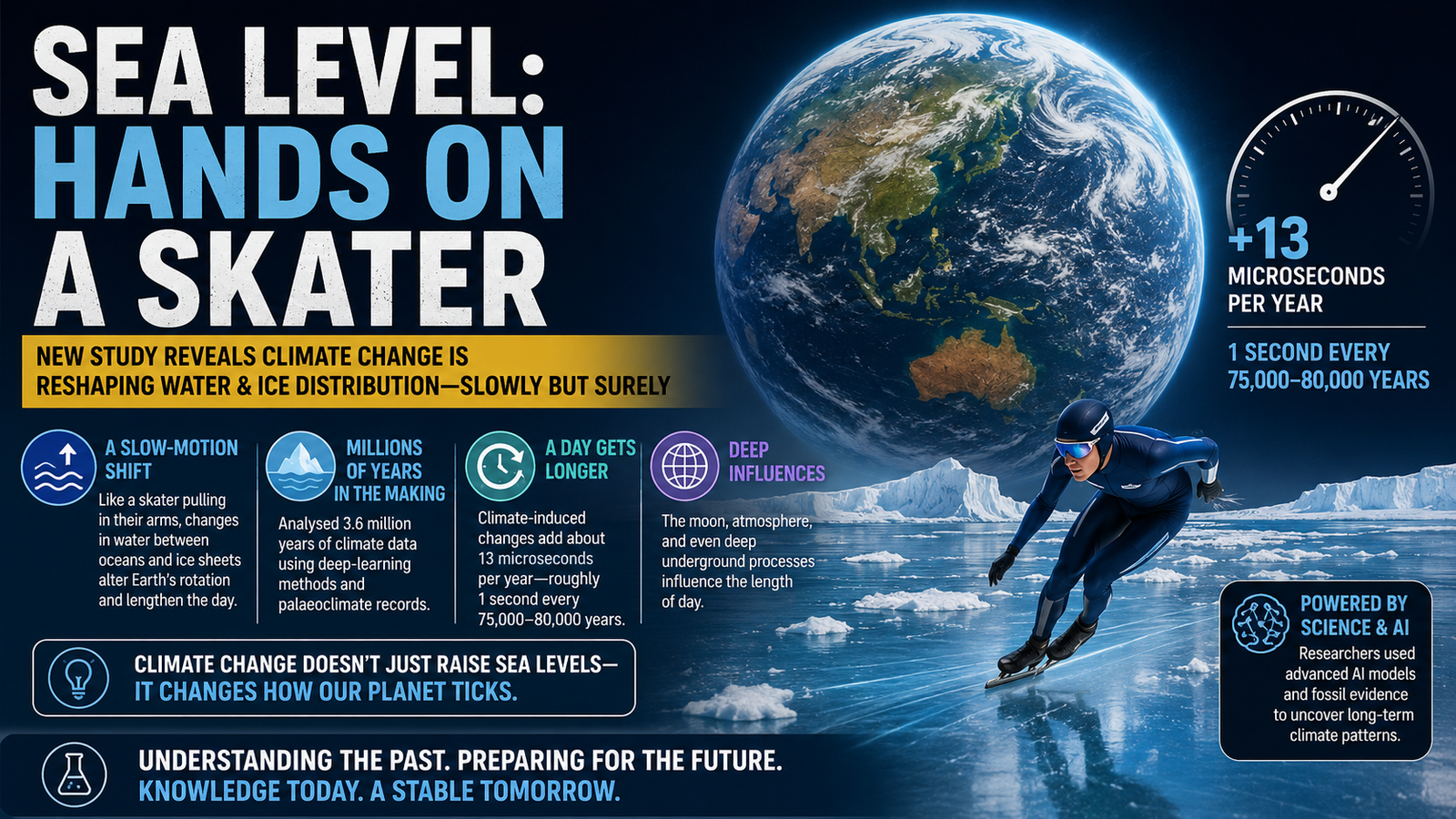
'जेजीआर सॉलिड अर्थ' (JGR Solid Earth) में प्रकाशित एक नए अध्ययन से पता चला है कि जलवायु परिवर्तन पृथ्वी पर पानी और बर्फ के वितरण को बदल रहा है, जिससे इसकी घूर्णन गति (rotation) धीमी हो रही है। 'आइस स्केटर' प्रभाव की तरह, बर्फ पिघलने से दिन की लंबाई 1.33 मिलीसेकंड प्रति सदी की अभूतपूर्व दर से बढ़ रही है।
पर्यावरण और विज्ञान: जलवायु परिवर्तन कैसे बढ़ा रहा है पृथ्वी पर 'दिन की लंबाई'
🌍 मुख्य निष्कर्ष और 'स्केटर' प्रभाव (Skater Effect):
- स्केटर का उदाहरण: जिस तरह घूमता हुआ एक आइस-स्केटर अपनी बाहों को बाहर की ओर फैलाने पर धीमा हो जाता है, ठीक उसी तरह ध्रुवीय बर्फ पिघलने से पानी भूमध्य रेखा (equator) की ओर बढ़ता है। इससे पृथ्वी का द्रव्यमान बाहर की ओर खिसकता है और इसके घूमने की गति (rotation) धीमी हो जाती है।
- अभूतपूर्व दर: आधुनिक जलवायु परिवर्तन के कारण दिन की लंबाई लगभग 1.33 मिलीसेकंड (ms) प्रति शताब्दी (या 13 माइक्रोसेकंड प्रति वर्ष) की दर से बढ़ रही है।
- ऐतिहासिक तुलना: डीप-लर्निंग विधियों और 3.6 मिलियन वर्ष (प्लिओसीन युग) पुराने पेलियोक्लाइमेट रिकॉर्ड का उपयोग करते हुए, शोधकर्ताओं ने पाया कि वर्तमान वृद्धि दर पिछले 36 लाख वर्षों में सबसे तेज है।
⏱️ भविष्य के लिए इसका क्या अर्थ है?
वैज्ञानिकों को लंबे समय से पता है कि चंद्रमा का गुरुत्वाकर्षण और पृथ्वी के आंतरिक प्रक्रियाएं इसके घूमने को प्रभावित करती हैं, लेकिन अब जलवायु-प्रेरित कारक एक बड़ी भूमिका निभा रहे हैं। 1.33 मिलीसेकंड प्रति सदी की वर्तमान गति से, एक दिन को केवल एक सेकंड लंबा होने में लगभग 75,000 से 80,000 वर्ष लगेंगे। हालाँकि, चिंता की बात यह है कि जैसे-जैसे ग्लोबल वार्मिंग (Global Warming) तेज होगी, दिन के लंबे होने की यह दर और भी बढ़ सकती है।
Science Update: Climate Change is Increasing the Length of Earth's Day
27 May 2026
A new study published in JGR Solid Earth reveals that climate change is altering the distribution of water and ice on Earth, slowing down its rotation. This phenomenon, likened to a spinning skater extending their arms, is increasing the length of a day at an unprecedented rate of 1.33 milliseconds per century.
Environment & Science: How Climate Change is Lengthening Earth's Day
🌍 Key Findings & The 'Skater' Effect:
- The Skater Analogy: Just as a spinning ice skater slows down by extending their arms outward, the melting of ice sheets redistributes water towards the equator. This shifts the Earth's mass outward, slowing its rotation.
- Unprecedented Rate: Modern climate change is increasing the length of a day at roughly 1.33 milliseconds (ms) per century (about 13 microseconds per year).
- Historical Context: Using deep-learning methods and palaeoclimate records going back 3.6 million years (Late Pliocene epoch), researchers found this current rate to be among the fastest in that entire period.
⏱️ The Long-Term Implication
While factors like the moon's pull and deep underground processes have long influenced Earth's rotation, the climate-induced component is now a major factor. At the current pace of 1.33 ms/century, it would take around 75,000 to 80,000 years for one day to become just one second longer. However, as global warming accelerates, the rate at which days lengthen may also increase.