अधिकतम तापमान से तेजी से बढ़ रहा है न्यूनतम तापमान: IMD की रिपोर्ट
19 May 2026
भारतीय मौसम विभाग (IMD) के अनुसार, देश के कई हिस्सों में रात का न्यूनतम तापमान सामान्य से अधिक दर्ज किया जा रहा है, जिससे गर्मी से राहत कम हो गई है और फसलों पर भी बुरा असर पड़ रहा है।
अधिकतम तापमान से तेजी से बढ़ रहा है न्यूनतम तापमान: IMD रिपोर्ट
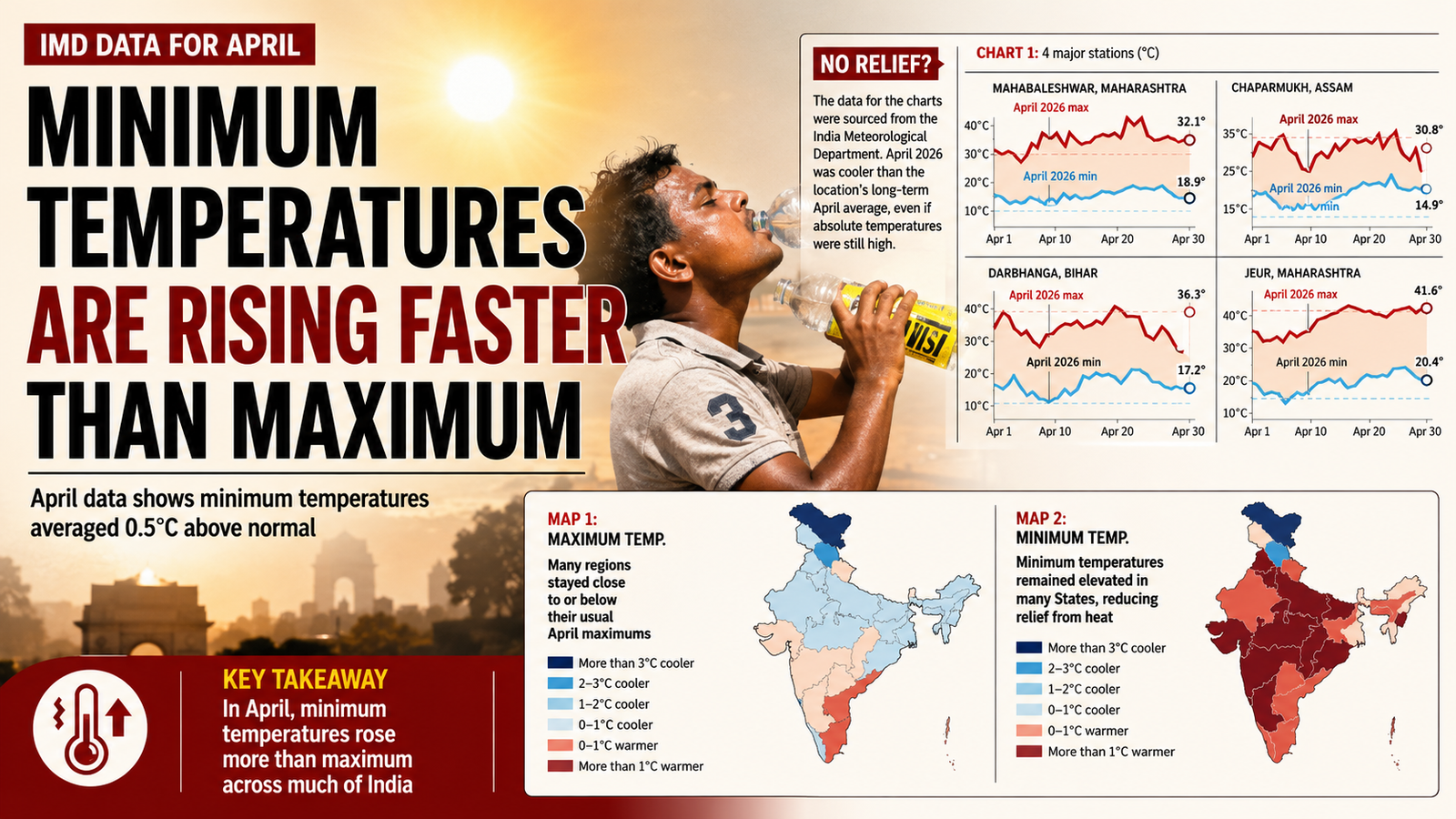
भारतीय मौसम विभाग (IMD) के अप्रैल 2026 के आंकड़ों ने एक चिंताजनक तस्वीर पेश की है। देश के कई हिस्सों में अधिकतम तापमान सामान्य के करीब रहा, जबकि न्यूनतम तापमान औसत से 0.5 डिग्री सेल्सियस अधिक दर्ज किया गया।
प्रमुख निष्कर्ष:
- रात में राहत की कमी: न्यूनतम तापमान बढ़ने का मतलब है कि रात के समय भी गर्मी बनी रहती है, जिससे शरीर को गर्मी से उबरने का समय नहीं मिल पाता।
- खेती पर असर: विश्व मौसम विज्ञान संगठन (WMO) की चेतावनी के अनुसार, रात में अधिक तापमान होने से पौधों की ऊर्जा का उपयोग बढ़ जाता है, जिससे फसल की वृद्धि रुक सकती है।
- क्षेत्रीय प्रभाव: असम के चापरमुख और ओडिशा के फुलबनी जैसे क्षेत्रों में न्यूनतम तापमान में सबसे अधिक अंतर देखा गया।
यह रिपोर्ट बताती है कि केवल दिन की गर्मी ही नहीं, बल्कि लगातार गर्म होती रातें भी स्वास्थ्य और कृषि के लिए एक बड़ी चुनौती बन रही हैं।
Minimum Temperatures Rising Faster Than Maximums: IMD Report
19 May 2026
A recent IMD report reveals that while daytime heat is near normal, rising minimum temperatures are significantly reducing nighttime cooling, posing risks to human health and agriculture
Minimum Temperatures Rising Faster Than Maximums: IMD Report
The India Meteorological Department (IMD) has highlighted a concerning trend: while maximum temperatures in April remained near normal, minimum temperatures have averaged 0.5 degrees Celsius above normal, significantly reducing nighttime relief from the heat.
Key Findings:
- Reduced Recovery: Higher night temperatures mean the body and environment have little time to recover from daytime heat.
- Agricultural Impact: WMO warns that high night-time temperatures force plants to burn energy, potentially causing stunted growth.
- Regional Variation: Areas like Chaparmukh (Assam) and Phulbani (Odisha) recorded significant deviations in minimum temperatures.
The data confirms that for many regions, the 'normal' threshold is shifting, making heat stress a persistent 24-hour challenge.